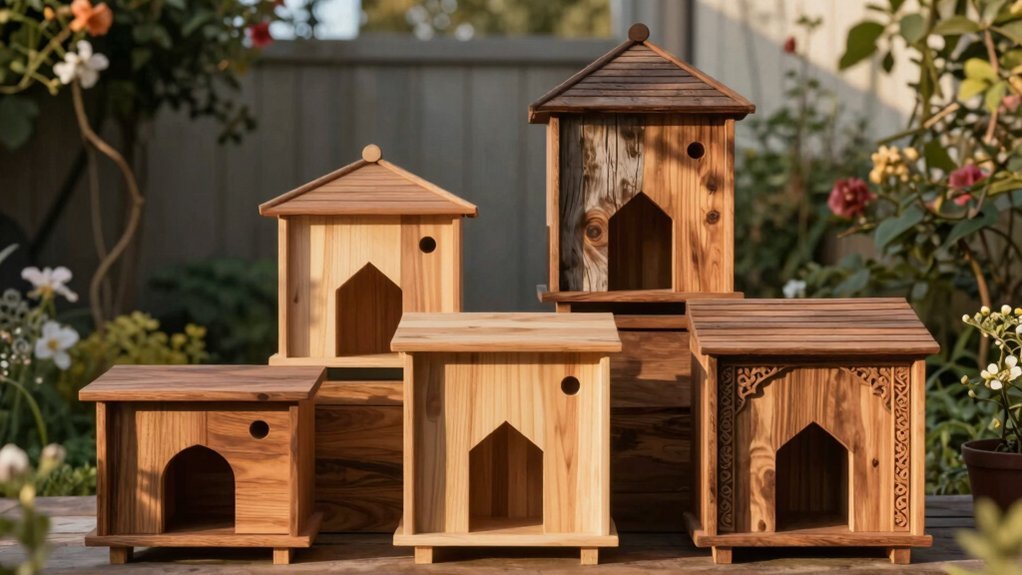
You’re investing in your small birds’ comfort, so you’ll want the right nesting box. Whether you’re raising parakeets, finches, or lovebirds, you’ve got options that blend durability with practicality. From wood constructions with predator guards to lightweight paulownia designs, each has distinct advantages. But which one actually suits your setup best? Let’s explore what makes these five stand out.
| Sukh Bird Nesting Material for Multiple Bird Species (2) |  | Best Nesting Material | Primary Material: Mixed natural fibers (jute silk, straw, cotton, agave) | Suitable Bird Species: Budgies, parrots, finches, canaries, hummingbirds | Design Type: Loose nesting material | CHECK ON AMAZON | Read More |
| PINVNBY Parakeet Nesting Box Wood Breeding House (S) |  | Best for Breeding | Primary Material: Natural wood | Suitable Bird Species: Lovebirds, parakeets, cockatiels, budgies, finches, canaries | Design Type: Enclosed box with hinged lid and perch | CHECK ON AMAZON | Read More |
| Hiceeden 2 Pack Natural Wood Parakeet Nest Box |  | Best Value Pack | Primary Material: Premium paulownia wood | Suitable Bird Species: Lovebirds, parakeets, budgies, cockatiels, parrotlets | Design Type: Wooden nest box with top opening and perch | CHECK ON AMAZON | Read More |
| TiereCare Parakeet Nesting Box Wooden Bird Cage House |  | Best Observation Box | Primary Material: Natural wood with acrylic front panel | Suitable Bird Species: Lovebirds, cockatiels, budgies, finches, parrots | Design Type: Wooden box with acrylic observation panel and hinged lid | CHECK ON AMAZON | Read More |
| Bird Houses for Outside with Metal Predator Guard |  | Best Outdoor House | Primary Material: Solid wood with carbonized surface | Suitable Bird Species: Bluebirds, wrens, tree swallows, chickadees | Design Type: Outdoor wooden house with predator guard | CHECK ON AMAZON | Read More |
More Details on Our Top Picks
Sukh Bird Nesting Material for Multiple Bird Species (2)
If you’re looking for versatile nesting material that works across multiple bird species, Sukh’s offering delivers exactly what you need. This 80-gram blend combines high-quality jute silk, straw, cotton, and agave sisalana in optimal proportions. You’ll appreciate the dust-free composition that keeps your cage clean and maintenance-free. The soft, flexible material adapts to any nest size, whether you’re housing budgies, parrots, finches, or canaries. Birds instinctively use it to construct warm, comfortable nests that promote nesting success. Perfect for both pet owners and nature enthusiasts, this nesting material makes an excellent gift while supporting healthy nesting behaviors.
- Primary Material:Mixed natural fibers (jute silk, straw, cotton, agave)
- Suitable Bird Species:Budgies, parrots, finches, canaries, hummingbirds
- Design Type:Loose nesting material
- Key Functional Feature:Dust-free, soft, flexible bedding
- Installation/Use:Hang or scatter in cage/garden
- Customer Rating:Not provided
- Additional Feature:Dust-free, minimal particles
- Additional Feature:80g flexible quantity
- Additional Feature:Safe for small birds
PINVNBY Parakeet Nesting Box Wood Breeding House (S)
Looking for a nesting box that’ll withstand daily use while keeping your small birds safe? The PINVNBY Parakeet Nesting Box delivers natural wood construction with an eco-friendly, non-toxic design perfect for lovebirds, parakeets, cockatiels, and budgies. You’ll appreciate the top hinged lid for effortless cleaning and the perching ledge your birds can lounge on. The small entrance protects against wind, rain, and predators, while the arc design minimizes fall risks. At 4.72 x 4.72 x 7.68 inches, the S-size fits most medium-sized birds. With 4.5 stars from 809 reviews, this durable option encourages natural breeding behaviors while providing reliable shelter your flock needs.
- Primary Material:Natural wood
- Suitable Bird Species:Lovebirds, parakeets, cockatiels, budgies, finches, canaries
- Design Type:Enclosed box with hinged lid and perch
- Key Functional Feature:Easy cleaning access and predator protection
- Installation/Use:Mount indoors or outdoors; bolt lock stability
- Customer Rating:4.5 out of 5 stars (809 reviews)
- Additional Feature:Top hinged lid design
- Additional Feature:Arc design reduces falls
- Additional Feature:Multiple size options available
Hiceeden 2 Pack Natural Wood Parakeet Nest Box
The Hiceeden 2 Pack Natural Wood Parakeet Nest Box stands out as an excellent choice for breeders working with small parrot species like budgies, lovebirds, and cockatiels. You’ll appreciate the solid paulownia wood construction, which offers durability without excess weight. The 2.2-inch entry features a protective metal ring preventing biting damage, while the built-in bottom baffle keeps eggs secure. You can easily monitor your birds through the top opening and remove bedding for quick cleaning. With dimensions of 7.7 × 4.7 × 4.7 inches, each box provides adequate space for mating and chick-rearing. The set includes two boxes, giving you flexibility for multiple breeding pairs. At 4.6 stars from 249 reviews, customers consistently praise its quality and functionality.
- Primary Material:Premium paulownia wood
- Suitable Bird Species:Lovebirds, parakeets, budgies, cockatiels, parrotlets
- Design Type:Wooden nest box with top opening and perch
- Key Functional Feature:Metal-ringed entry and removable bedding system
- Installation/Use:Mating, nesting, and aviary use
- Customer Rating:4.6 out of 5 stars (249 reviews)
- Additional Feature:Metal ring entry protection
- Additional Feature:Built-in bottom baffle
- Additional Feature:2 boxes per pack
TiereCare Parakeet Nesting Box Wooden Bird Cage House
Want a breeding box that won’t compromise your view of your birds’ nesting behavior? The TiereCare Parakeet Nesting Box delivers with its high-visibility acrylic front panel, letting you observe without disturbing your feathered friends. This wooden nest box accommodates lovebirds, cockatiels, budgies, finches, and parrots in an enclosed space that encourages natural breeding behavior. The hinged lid simplifies cleaning and bedding replacement, maintaining a hygienic environment. Sturdy natural wood construction ensures durability, while included perches and hardware make installation straightforward. Weighing just 14.4 ounces and measuring 8.86 x 5.71 x 5.43 inches, it attaches securely to your existing cage. With 4.2 stars from 281 reviews, this nesting box combines functionality with reliable performance.
- Primary Material:Natural wood with acrylic front panel
- Suitable Bird Species:Lovebirds, cockatiels, budgies, finches, parrots
- Design Type:Wooden box with acrylic observation panel and hinged lid
- Key Functional Feature:High-visibility observation without disturbance
- Installation/Use:Attaches to side of existing cage
- Customer Rating:4.2 out of 5 stars (281 reviews)
- Additional Feature:High visibility acrylic panel
- Additional Feature:Included perches and hardware
- Additional Feature:Side cage attachment ready
Bird Houses for Outside with Metal Predator Guard
If you’re protecting cavity-nesting songbirds like bluebirds, wrens, and chickadees from predatory threats, you’ll want a nesting box equipped with a sturdy metal predator guard. This design features carbonized solid wood with a stainless steel guard surrounding the entry hole, preventing larger predators from accessing vulnerable fledglings. The cedar interior includes ladder-like grooves that help young birds climb toward the opening. Installation’s straightforward—you’ll get pre-drilled holes and rust-proof screws for mounting on trees or fences. When nesting season ends, you’ll open the front door for hassle-free cleaning. The high-temperature carbonization process ensures long-lasting durability against weather and wear, making this box a reliable investment for your backyard songbirds.
- Primary Material:Solid wood with carbonized surface
- Suitable Bird Species:Bluebirds, wrens, tree swallows, chickadees
- Design Type:Outdoor wooden house with predator guard
- Key Functional Feature:Metal predator guard and cedar interior ladder
- Installation/Use:Mount on tree or fence outdoors
- Customer Rating:Not provided
- Additional Feature:Carbonized wood surface
- Additional Feature:Stainless steel predator guard
- Additional Feature:Cedar interior with ladder
Factors to Consider When Choosing a Nesting Box for Small Birds
When you’re selecting a nesting box for small birds, you’ll want to evaluate material quality and safety to ensure your structure withstands weather and predators. You must also consider practical features like appropriate size selection, adequate ventilation and drainage, and entry hole dimensions that match your target species. Finally, you’ll appreciate how easy cleaning and maintenance access makes seasonal upkeep manageable.
Material Quality And Safety
Why shouldn’t you overlook what your nesting box is made from? The materials directly impact your birds’ health and safety. You’ll want to choose untreated, natural wood or non-toxic alternatives that won’t expose your feathered friends to harmful chemicals.
Inspect the interior carefully for smooth surfaces and deburred edges that prevent injuries to delicate feathers and feet. Check that all hardware—metal rings, hinges, and fasteners—resists corrosion and won’t develop sharp edges or rust.
Avoid materials that shed dust, fibers, or splinters, as these pose respiratory and physical hazards. Prioritize solid construction that minimizes entanglement risks while ensuring proper ventilation. Look for predator guards and stable design features that protect against external threats.
Appropriate Size Selection
Getting the dimensions right is essential—you can’t simply grab any box and expect your birds to thrive in it. You’ll need to match the box size to your specific bird species. Small birds like budgies and canaries require compact boxes, while lovebirds and cockatiels need slightly larger dimensions to move comfortably. Beyond overall size, you should verify the entry hole diameter carefully. The opening must be large enough for your target species to enter easily but small enough to exclude predators and prevent drafts from compromising the nest. Pay attention to your cage or outdoor setup’s mounting compatibility as well. An ill-fitting installation creates stress for your birds and frustration for you. Take time to measure your space and cross-reference species requirements before purchasing.
Ventilation And Drainage
How critical is proper airflow to your birds’ health? Ventilation directly prevents mold growth and respiratory infections that threaten small birds. You’ll want vent holes positioned strategically to encourage airflow without creating damaging drafts that chill eggs or chicks.
Drainage matters equally. You should incorporate small drainage holes or slotted floors that let spilled water and condensation escape, keeping nests consistently dry. This prevents moisture-related diseases and maintains a healthier environment.
Balance remains key. You’re aiming for a breathable yet secure enclosure that protects against predators while regulating temperature. Avoid overly porous materials or excessive holes that expose your birds to wind and predators. The right design safeguards occupants while maintaining stable inner conditions your birds need to thrive.
Entry Hole Dimensions
While ventilation and drainage keep the nest’s interior healthy, the entry hole itself serves as your first line of defense against predators and environmental stress. You’ll want to match the hole diameter to your target species—typically 1.5 to 2.5 inches for small birds like finches and parakeets.
A properly sized entrance accomplishes multiple goals. It restricts predator access while allowing adult birds easy entry. Smaller holes also minimize drafts and rain exposure, creating a safer nesting environment. Consider reinforced edges or metal rings around the hole to prevent bites and wear from repeated use throughout breeding seasons.
The hole’s placement—its height and orientation—works alongside its size to deter predators and accommodate your birds’ natural nesting preferences.
Cleaning And Maintenance
Since nesting boxes accumulate bedding, debris, and waste throughout breeding cycles, you’ll need designs that prioritize easy access and sanitation. Look for top-hinged lids or front doors that open wide, allowing you to remove soiled bedding without hassle. Choose durable, low-dust materials like solid wood with smooth interiors to minimize feather accumulation and maintain a clean environment.
Removable or replaceable bottom sections simplify between-cycle sanitation significantly. Built-in features such as bottom baffles and perching ledges reduce egg roll-offs while making debris removal around entry points easier. Accessible perches and clear interior layouts enable you to inspect nests and remove waste routinely without disturbing your birds. These thoughtful design elements transform maintenance from tedious to manageable.
Durability For Long-Term Use
Longevity demands that you invest in nesting boxes built from solid, weather-resistant materials like paulownia or natural wood with reinforced joints that’ll withstand years of outdoor exposure and persistent pecking. Metal-reinforced entry rings and bite-resistant edges protect against damage from repeated use and chewing. You’ll want a weatherproof, non-toxic finish that prevents warping and maintains structural integrity over time. Smooth interior surfaces resist deterioration and support long-term functionality. Robust hinges and secure latches endure countless cleaning cycles without failing. Choose lightweight yet durable construction that minimizes stress on mounting points, ensuring your investment holds up through multiple seasons of nesting activity.
Natural Design Features
Beyond durability, you’ll find that natural design features create an environment where small birds feel genuinely at home. Untreated wood with minimal chemical finishes and a forest aroma reassure birds they’re entering a safe habitat.
You’ll want to carefully size and position entry holes to balance accessibility with protection from wind and predators. Consider designs with hinged lids or removable components—they let you clean and replace bedding without disrupting active nests.
Built-in perching ledges and bottom baffles support nesting behavior while preventing egg displacement. Select woods like paulownia or cedar for their lightweight yet durable qualities, ensuring your box withstands seasons of outdoor exposure while maintaining its natural appeal that attracts small birds.
Frequently Asked Questions
How Often Should Nesting Boxes Be Cleaned During Breeding Season?
You should clean nesting boxes every one to two weeks during breeding season. Remove soiled bedding, droppings, and debris carefully to avoid disturbing eggs or nestlings. This prevents disease and parasites while maintaining a healthy environment.
What Temperature Range Is Ideal for Small Bird Nesting Boxes?
You’ll want to maintain temperatures between 65-75°F for most small bird nesting boxes. You should guarantee proper ventilation and shade to prevent overheating during summer months. You can monitor conditions regularly to keep your birds comfortable.
Can Different Bird Species Safely Share the Same Nesting Box?
You shouldn’t mix different bird species in one nesting box. They’ll compete aggressively for space and resources, potentially injuring each other or destroying eggs. You’ll have better success providing separate boxes designed for each species’ specific needs.
How Do I Prevent Mold and Moisture Buildup Inside Nesting Boxes?
You’ll prevent mold by installing drainage holes in the box’s bottom and adding ventilation gaps near the roof. You should also use dry bedding materials, clean boxes regularly, and position them where air circulates freely around them.
What Is the Average Lifespan of a Wooden Nesting Box?
You’ll typically get 5-10 years from a wooden nesting box if you’re maintaining it properly. However, you can extend that lifespan to 15+ years by applying weather-resistant finishes and replacing rotted sections regularly.


Leave a Reply